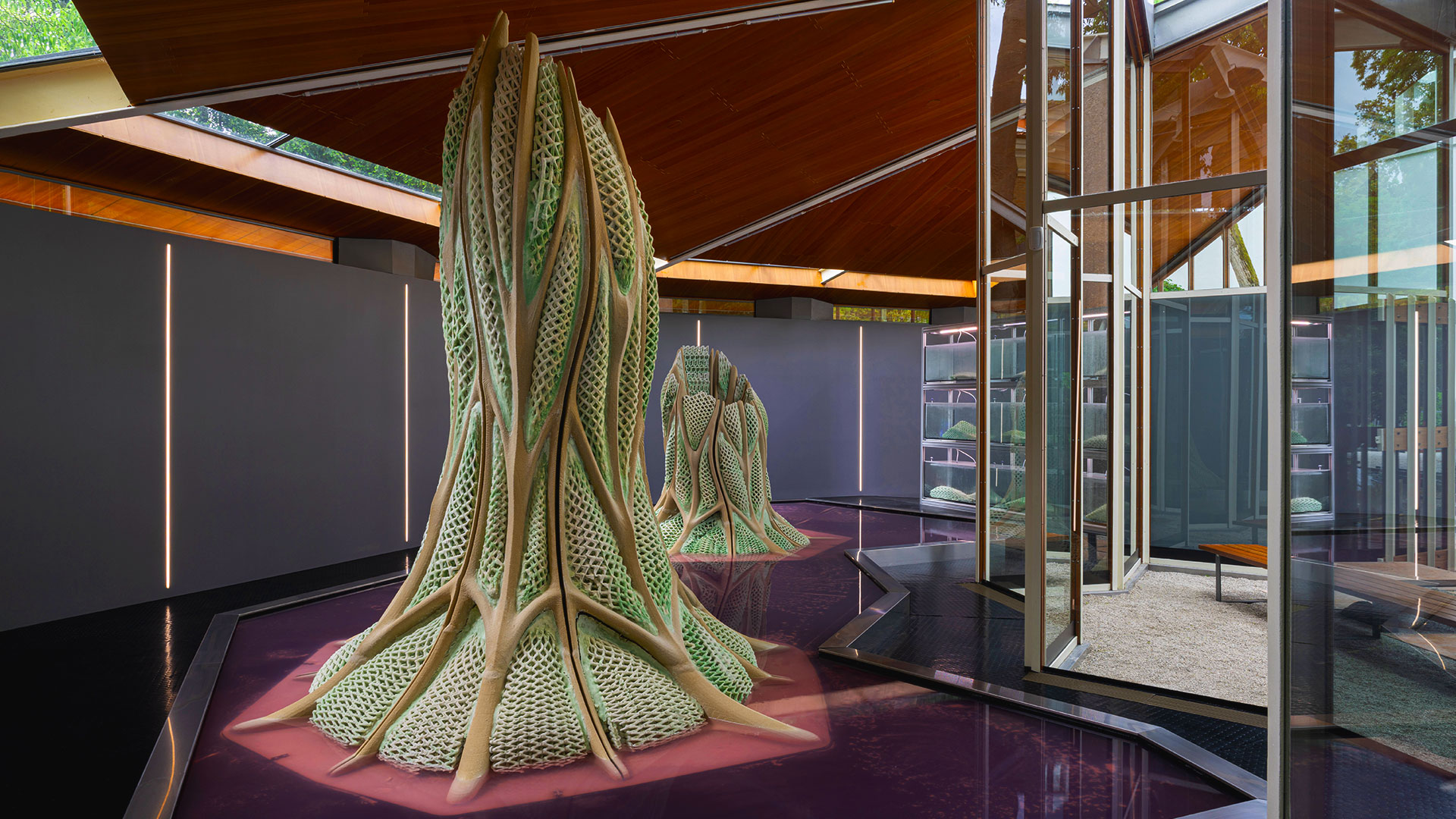
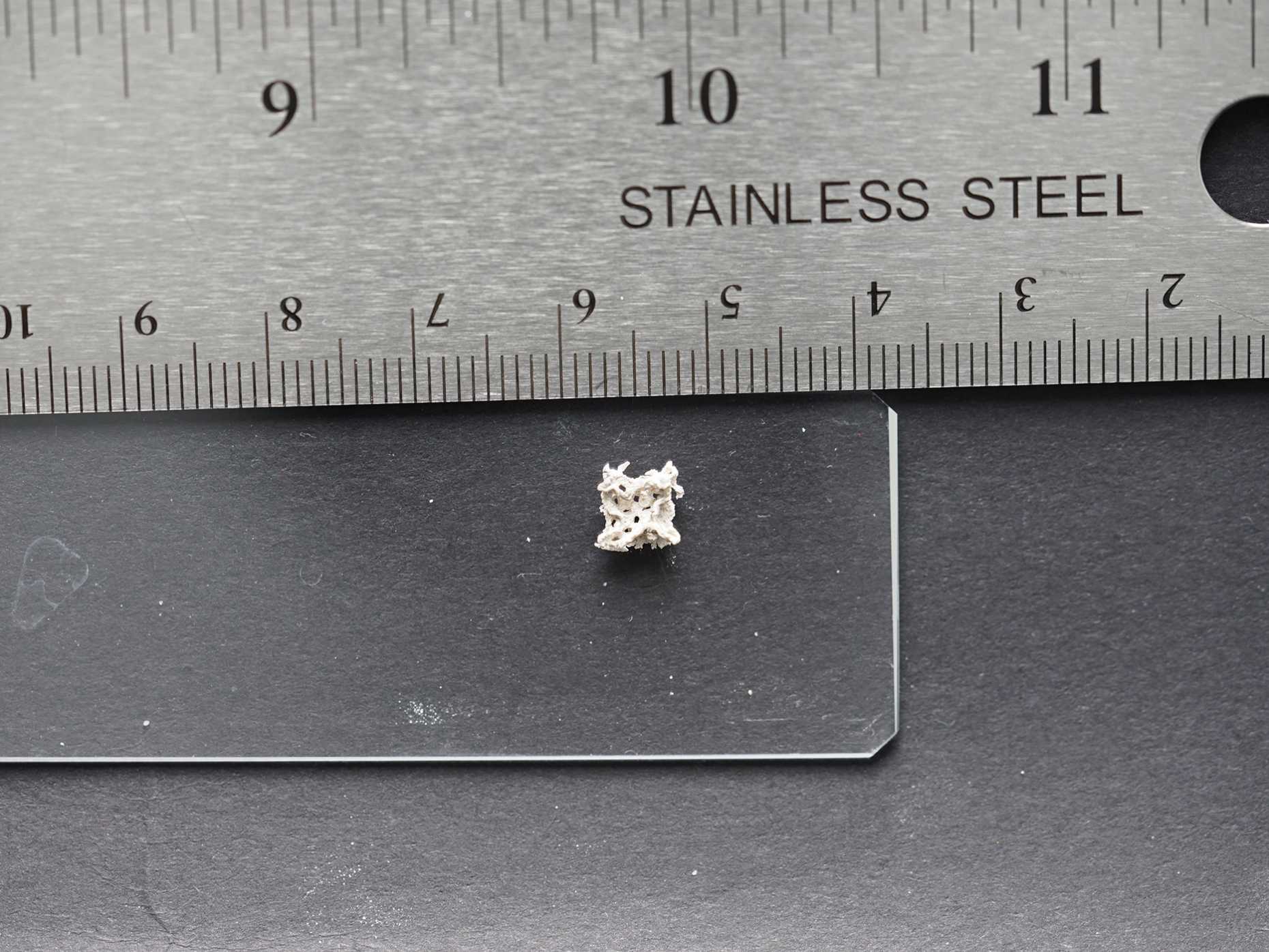
Picoplanktonics shows large-format objects made of photosynthetic structures. Based on Andrea Shin Ling’s research at ETH Zurich the team was able to demonstrate large-scale robotically printed structures, the largest living material prototypes made with this platform to date (caption based on description by Picoplanktonics).
When you live in a smaller town or big city, you are usually surrounded by buildings made of concrete, glass, plaster/stone or wood. It’s difficult to spot technical innovation. The fascinating part: Some of it is hiding in plain sight.
<span class="firstcharacter">M</span>aterial science in the building sector is constantly evolving and it’s a fascinating discipline because it allows you to take a glimpse into the future. Its extraordinary findings and inventions are quite necessary to face challenges such as resource scarcity, the changing climate, new regulatory requirements or regional environmental conditions.
I found three new materials which are being developed right now and which could have a big impact on the future of how buildings and public objects are designed, operate and what they look like.
CO₂ sinks: Living algae gel from Switzerland
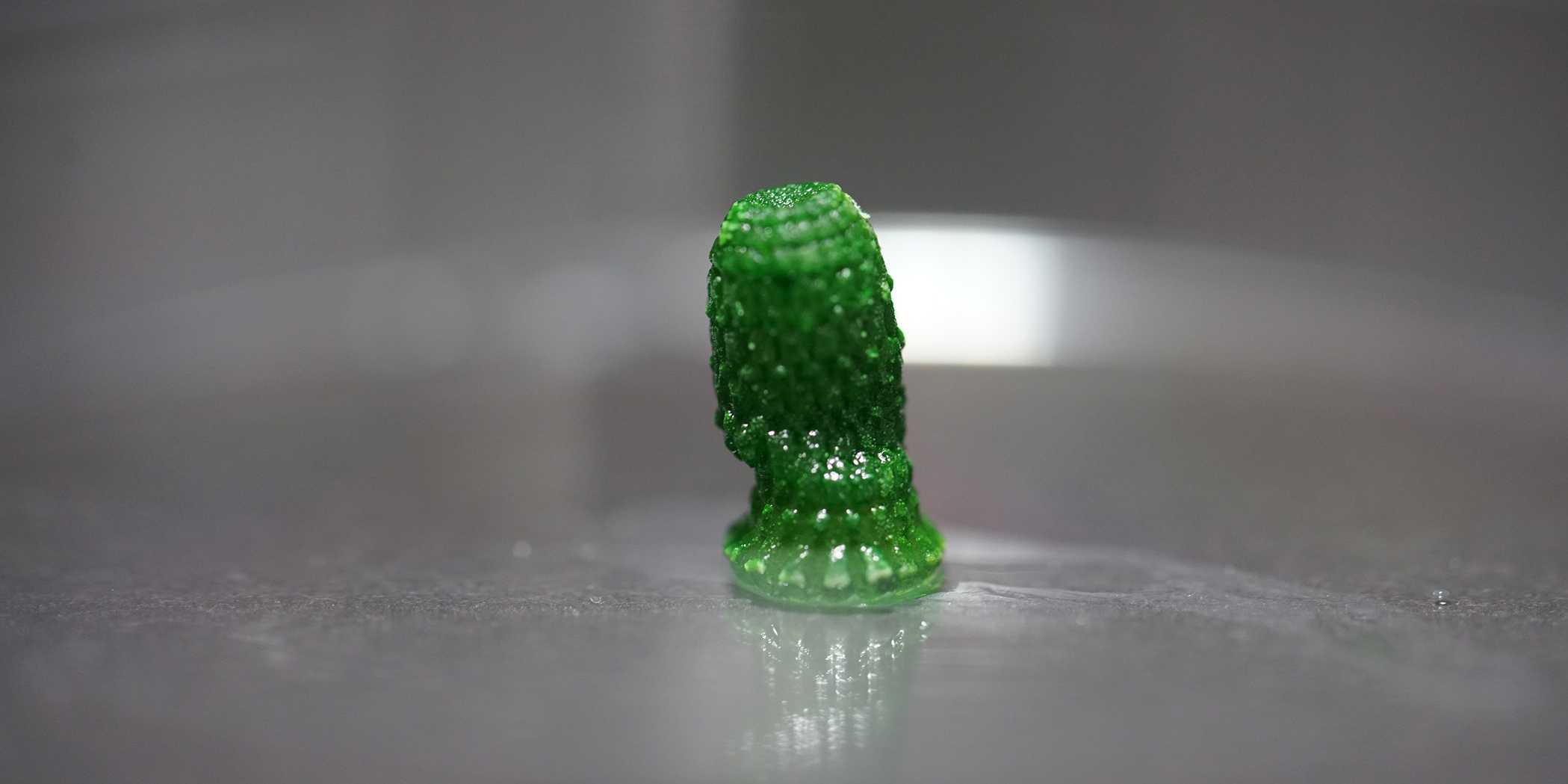
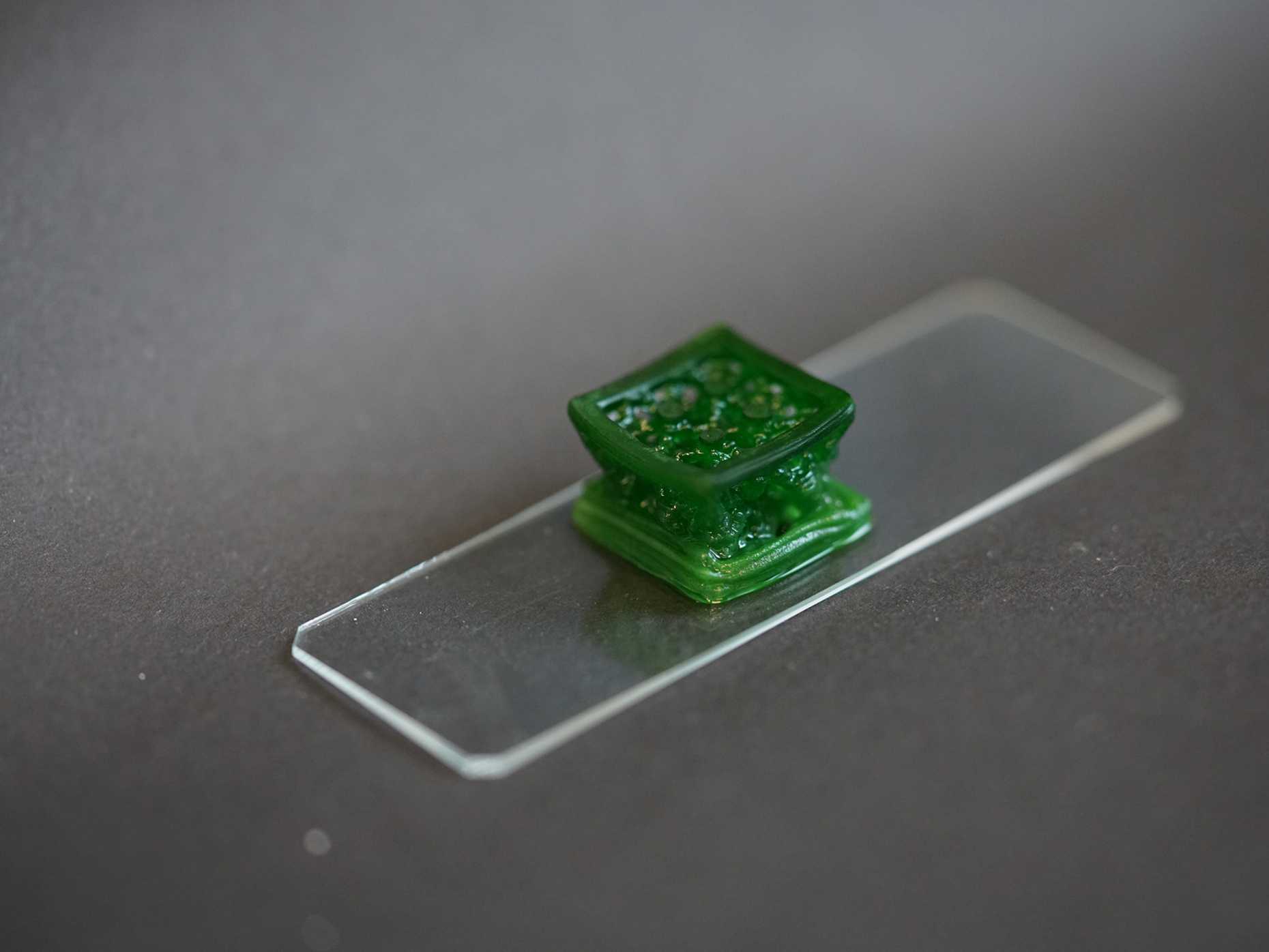
Researchers from the ETH Zurich (Federal Institute of Technology) developed a building material made of a hydrogel mix[1] that is embedded with photosynthetic cyanobacteria (blue-green algae). You can see one larger structure in the keyvisual of this article.
The purpose is to capture and store CO₂ in a stable, long-term form. It does so in two ways:
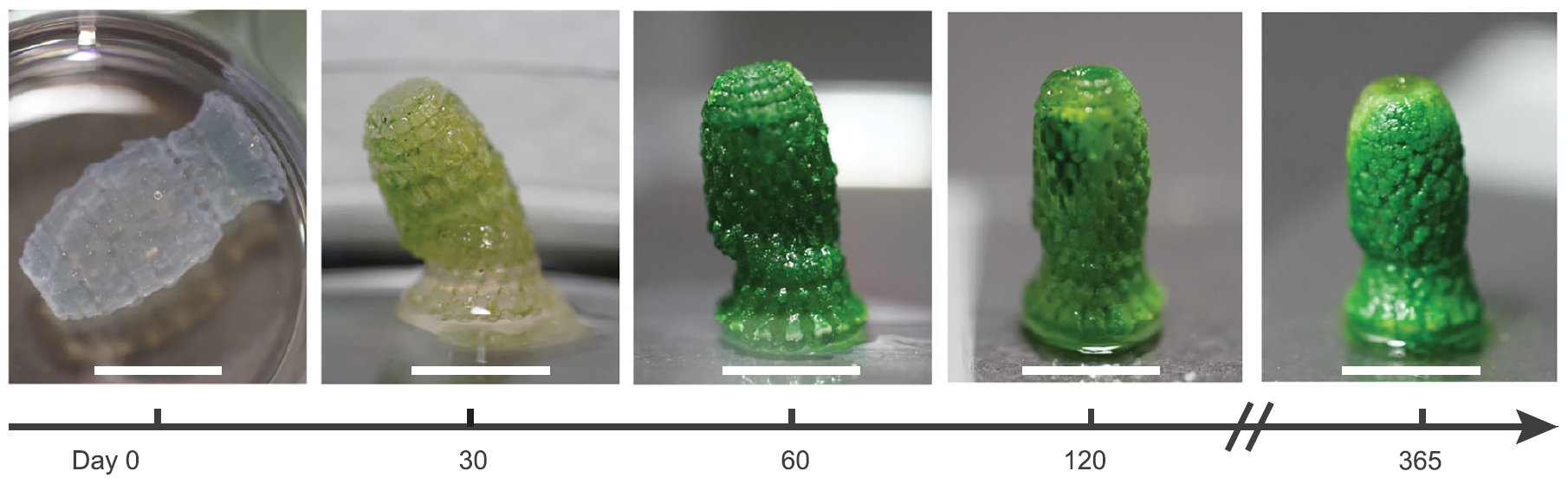
The cyanobacteria in the hydrogel extract CO₂ from the surrounding air by performing photosynthesis, reacting with water and using sunlight as the energy source. They create new temporary biomass around the structure in the form of living and thus less stable cells as the microbes grow and reproduce.
As a byproduct of photosynthesis, more stable carbonate minerals (such as calcium carbonate) are formed. This happens when cyanobacteria alter their local chemical environment by causing dissolved CO₂ to precipitate or crystallize into a solid form. It permanently stores carbon within the material while also contributing to its gradual hardening.
Lightweight and evolving
The material is 3D-printed as a lightweight structure and very porous at that. It's made entirely of a living hydrogel, whose shape is digitally designed to balance shape stability, light exposure, and access to air and nutrients.
After printing, the gel gradually stiffens through biologically induced carbonate mineral formation. Its permeable matrix (which allows certain substances to pass through) and open lattice make continuous internal transport of water, nutrients, and CO₂ possible through diffusion and capillary flow. The design and process also keep the microorganisms active throughout the structure. Basically it’s a living and ›breathing‹ organism.[1]
Possible applications
The applications are actually quite straightforward - Mark Tibbitt, one of the project leads explains:
In the future, we want to investigate how the material can be used as a coating for building façades to bind CO2 throughout the entire life cycle of a building.[1]
As shown via their exhibits in architectural contexts like the Venice Biennale and Milan Triennale another purpose can be to create new architectural forms (probably non-load-bearing or semi-load-bearing) which can add artistic value or shade (see the keyvisual of this article).[2]
Ultra-thin and stable: Carbon Concrete from Germany
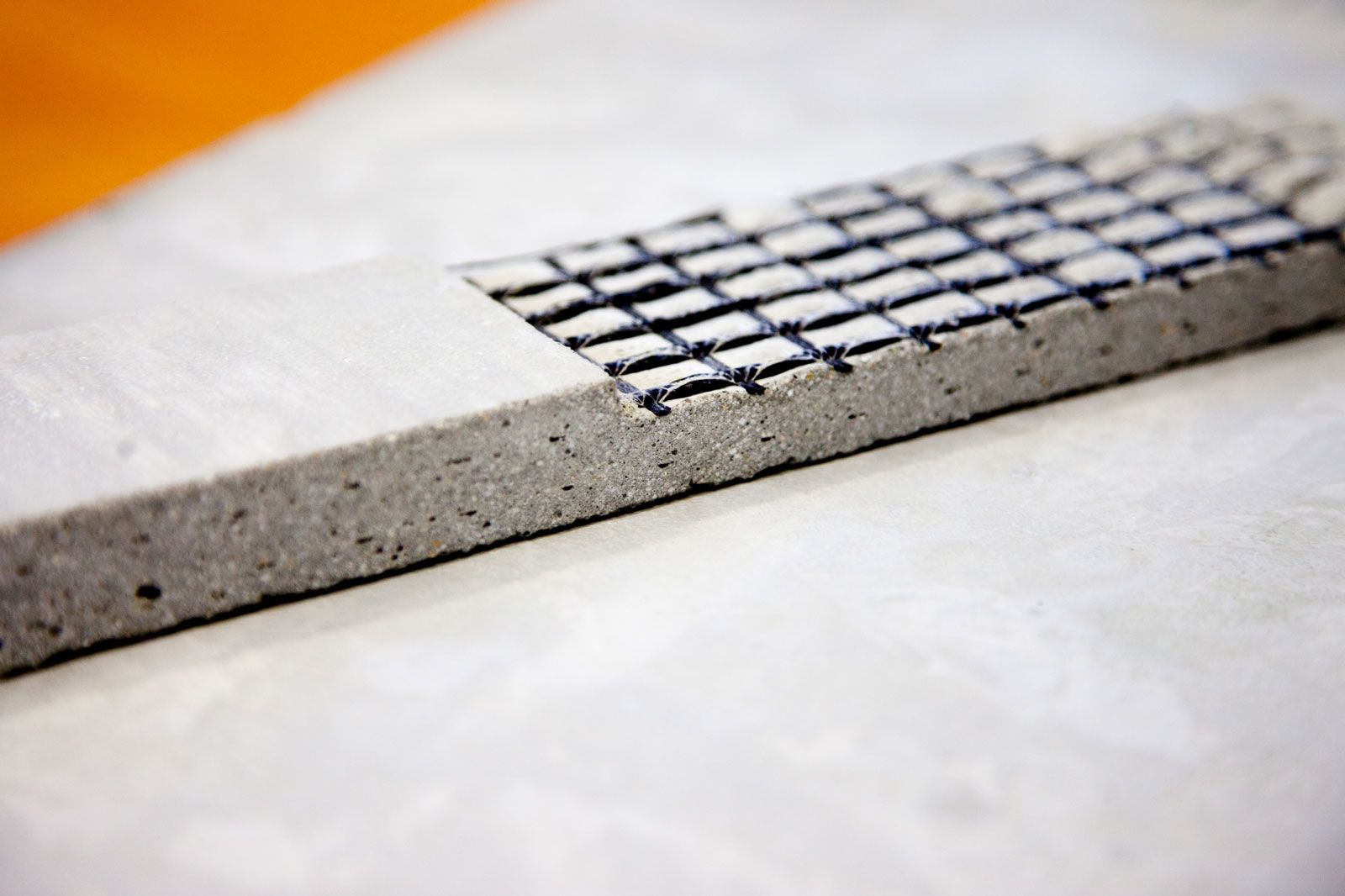
Since the original research on textile-based concrete in the late 1990s, the material has come a long way. Carbon concrete (K/Carbonbeton) sticks with the basic idea of reinforced concrete: The concrete takes compressive loads (e.g., the weight of a bridge deck pressing downward on a pillar), while the reinforcement takes tensile loads (such as the pulling forces that occur when a beam bends under traffic).
The key difference is that instead of using steel which is prone to corrosion, the concrete is embedded with resistant carbon fibers. In traditional reinforced concrete structures a large amount of the concrete is actually not needed to guarantee stability but to create a thick protective layer around the embedded steel elements to shield them from corrosion.[3]
The advantages: lighter, longer-lasting, more sustainable
Besides the increased lifespan of structures built with carbon concrete due to its non-corrosive nature, the material allows for the construction of much thinner elements. This not only makes it possible to reduce material use and weight by at least 50% compared to traditional reinforced concrete, simplifying logistics and construction.
It also offers new, more innovative and slender architectural design opportunities with concrete layers that can be as thin as a few centimeters.
Moreover, the carbon concrete panels are often created as prefabricated products in a standardized production process, using large computer-controlled machines, much like engineered wood panels.
The method reduces the on-site construction process largely to assembly, making the process more weather-independent and more precise. Since these prefabricated structures in buildings or bridges are based on a modular system they can also be disassembled for the carbon concrete panels to be reused, supporting a more sustainable and circular system while reducing material waste.[4]
The material still faces challenges because it’s still more expensive and energy-costly to produce than conventional reinforced concrete (in the short run) and competes with a construction method that has been established for more than a century. In addition, building approvals, standards, and fire-safety regulations are complex and slow down wider adoption.
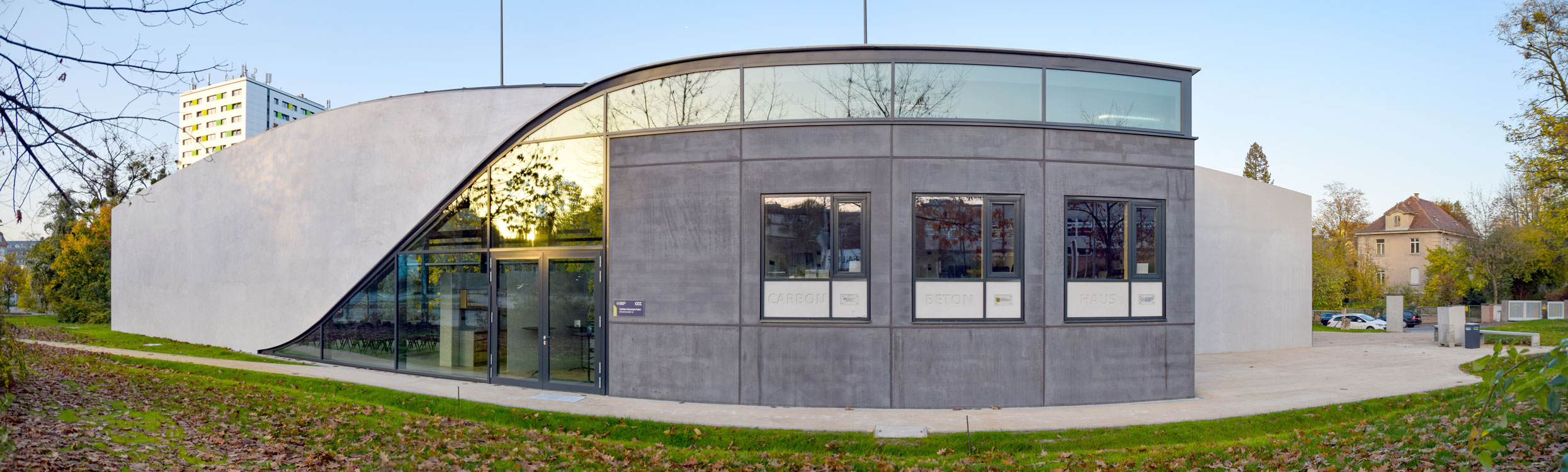
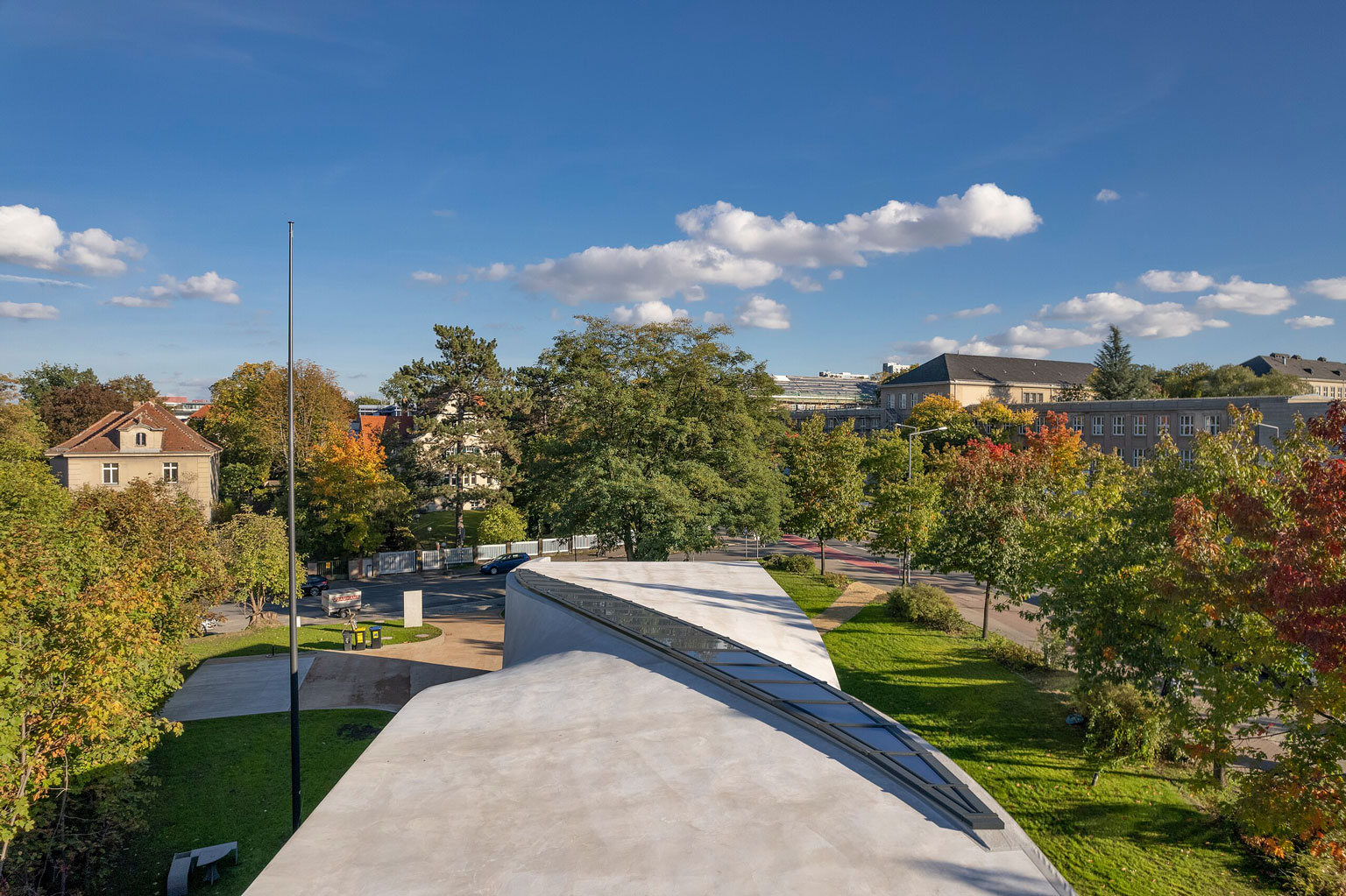
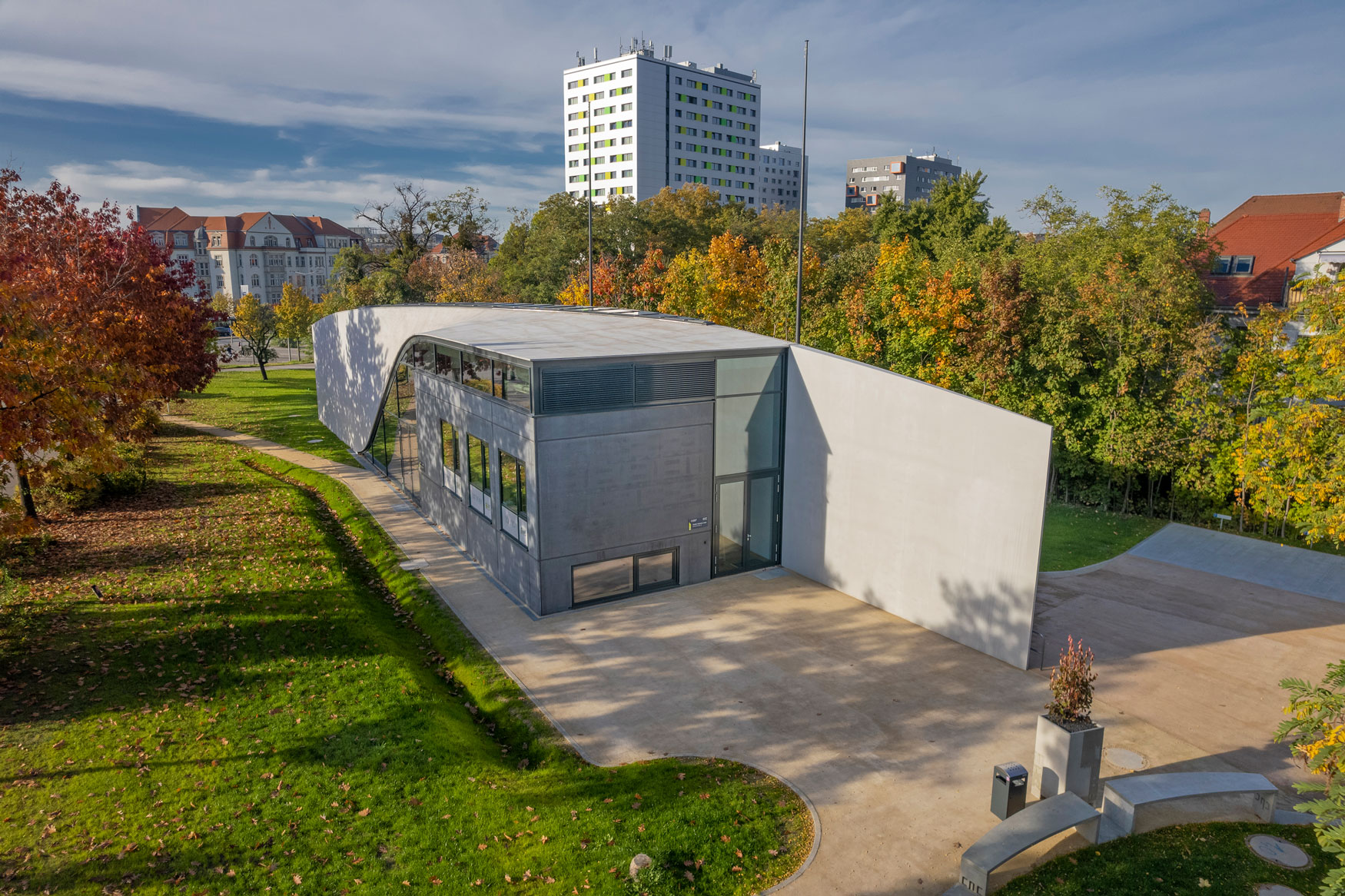
At the same time, there are already real-world applications such as a modular carbon-concrete pavilion built in 2025 near the Innovationslab Grüze in Winterthur (Switzerland), the reinforcement of aging Autobahn bridges in Frankfurt am Main (Germany) using thin carbon-concrete layers and other projects in North America.[5]
Better insulation and more transparent than glass: MOCHI Material from the USA
The idea targets a basic building energy problem: Windows usually make up around 8% of a building’s envelope but account for about 50% of heat transfer. MOCHI aims to solve this problem by improving insulation without sacrificing visibility.
The material has over 99% optical transparency (glass has less than 92%).
The thermal conductivity is only 10 milliwatts per degree of temperature difference and per meter, whereas for still air – used, for example, in down jackets or between the panes of double-glazed windows – it is about 27 milliwatts. In this case, less is better. [7]
Basically, to create the material, the team engineered pores in a narrow range of around 2–50 nanometers: small enough to minimize visible-light scattering (so it stays clear) and small enough to suppress heat being transferred between gas molecules.[7]
The researchers mixed a special type of solution consisting of tenside molecules (e.g., found in washing detergents) and silicon. The tensides or surfactants let the silicon molecules naturally line up on their own and form very small, cylindrical structures. In the next step, the soap-like molecules and the liquid are removed during drying. What remains is a solid silicone material filled with billions of tiny, evenly arranged air pockets.[6]
Possible applications
MOCHI is being made as thin sheets or thicker slabs, designed to be added to windows (e.g., as retrofittable films or as part of insulated glass units). At the moment the production is limited to pieces of around 1 m² - the material is not consumer-available yet.
That said, due to the inexpensive nature of the materials and the cost-saving benefits due to the reduction of heat loss, commercialization isn’t that far-fetched, as this Forbes article highlights.[8]
<span class="headingcolor" style="display: block; text-align: center;">Thanks for your attention!</span>






Let me know what you think